READ MORE - More counterfeit euro coins discovered in 2012
They who are of the opinion that Money will do everything, may very well be suspected to do everything for Money

Rice University and University of Colorado at Boulder researchers also found that the average life expectancy in the United States is still trailing behind that of other nations at around 78, including Japan (83.91 years), Macau (84.43) and Monaco (89.68).
![]()
In addition, researchers found that the greatest "growth spurts" in U.S. life expectancy occurred between the 1930s and the 1950s, and during the 1960s.
"Since that time, gains in life expectancy have flattened out," study researcher Justin Denney, an associate sociology professor at Rice University, said in a statement.
Specifically, life expectancy in 1930 was 59.85 in the U.S., while it was 77.1 in 2000.
"During periods of expansion in length of life, a similar expansion has occurred between more and less advantaged groups -- the rich get richer, the poor get poorer, inequality grows and life expectancy is dramatically impacted," Denney said. "And despite disproportionate spending on health care, life expectancy in the U.S. continues to fall down the ladder of international rankings of length of life. It goes to show that prosperity doesn’t necessarily equal long-term health."
The study will be published in the journal Social Science Quarterly. It included life expectancy data from 1930 to 2000, as well as forecast data up to 2055.
A similar study was also done in the U.K., results of which were published earlier this year -- it showed that wealthy people there also live longer than their poor counterparts.
Specifically, that study showed that those who work professional and/or higher managerial jobs live about three years longer than those who do more "routine tasks," HuffPost Business reported.
Recently, a study on county life expectancies from the Institute for Health Metrics and Evaluation showed that women's life expectancies are improving at a slower rate than men's across the country. Between 1989 and 2009, the researchers found that men's life expectancy increased by an average of 4.6 years. But women's life expectancy only increased by an average of 2.7 years.
Now, in 2009, the county calculations showed that men's life expectancy ranges from 66.1 to 81.6 years and the women's life expectancy ranges from 73.5 to 86, according to the study. ( huffingtonpost.com )
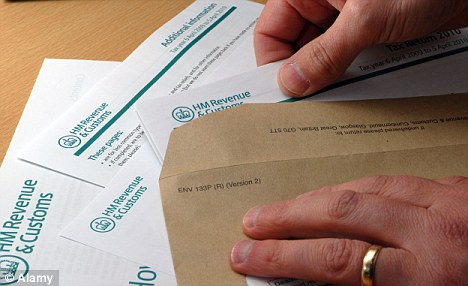
Paying cash in hand is ‘diddling’ the economy and depriving schools and hospitals of money, the country’s top taxman said last night.
Dave Hartnett, permanent secretary for tax at HM Revenue and Customs, called on people to report those they believed were evading tax.
He said paying a builder or cleaner in cash, allowing them to evade VAT or income tax, would result in even deeper Government cuts to public services.

Those who contribute to the black economy cannot then complain about austerity measures, he added.
HMRC has come in for stinging criticism in recent weeks for alleged ‘sweetheart’ deals with big firms such as Vodafone, allowing them to avoid paying millions of pounds in tax. But Mr Hartnett denied the charge.
He added: ‘Tax provides the funding to run the country: hospitals, schools and everything else. Every time someone pays cash in order not to pay VAT, the nation gets diddled.’
He said there would be a crackdown on the very rich who do not pay their fair share, with loopholes used by such people closed.
And he encouraged anyone who suspects wrongdoing to telephone the Revenue’s whistle-blower hotline and tip off inspectors.
‘Cash has been a problem for a long time. The people who are worried about it should use our whistle-blowing line to tell us,’ he said. ‘We are getting better and better at finding people who receive cash.

‘There are loopholes for wealthy people which have got to be closed down. We have not yet got the same head of steam up, addressing those loopholes as we have with business loopholes, but we will be there soon.’
He said HMRC aimed to increase its number of prosecutions for wilful non-payment six-fold, to 1,200 next year.
MPs last month accused Mr Hartnett of being ‘unduly cosy’ with big companies and of applying double standards to corporations and ordinary taxpayers.
It was alleged he agreed deals with companies including Goldman Sachs and Vodafone that allegedly let them off large bills worth millions of pounds. But Mr Hartnett claimed the Revenue’s ‘engagement policy’ with businesses had persuaded them to pay £25 billion in tax over the past six years which they otherwise would not have done.
‘We are not soft with big business; there was no sweetheart deal with Vodafone,’ he said. ‘We got all the money for the nation that was there to be got.’
He said the controversy has unfairly damaged the image of HMRC. ‘It has also done a huge disservice to the country. My own people are now more wary about how they engage with large corporate taxpayers, and large corporate taxpayers don’t want to end up on your front page,’ he said.
Mr Hartnett said there was once a culture in large companies for tax avoidance which is now widespread among well-heeled individuals.
HMRC is starting a campaign to target tens of thousands of cash-in-hand builders and other prosperous people who used to pay tax at the top rate but have now stopped.
Previous operations have homed in on home tutors, plumbers and eBay traders, and have pulled in an extra £500million in tax since 2007.
Mr Hartnett, who is retiring this summer after 36 years at the department, denied he had been forced to retire and said he had been getting ‘a lot of offers’ of work.

She had a forehead so taut and shiny it looked like an iPhone 4. Her lips were inflated to the size of a melting Twix, and her cheekbones looked as if they were climbing her jaw in order to dive to their death. Each change to her then 23-year-old face seemed to nod towards youth, but in fact imply age. This isn't to say she looked old – as she bounced down the catwalk, her hair streaming behind her, she seemed to have transcended age – she looked like lamb dressed as mutton dressed as duck.
Though traditionally cosmetic surgery has been used to make patients look younger, doctors are noticing a trend for women wanting to simply look "done". Rather than chase youthfulness with a scalpel, some seem to be choosing instead to fix their faces at a certain age (celebrity dermatologist Gervaise Gerstner suggests many women settle for 36) and maintain the look with injectable fillers and cosmetic treatments.
While few celebrities, Lohan included, will admit to having had cosmetic surgery, the surgeons themselves are outspoken. "It's a matter of the right procedure on the wrong girl at the wrong time," New York plastic surgeon Douglas Steinbrech told W magazine. "There's this new mentality that if you do not look a little bit fake, then the surgeon hasn't done his job. This used to be a much more prevalent idea on the west coast, but now you walk up Madison Avenue and you see these young girls with that cloned, cougar-like face. Either they don't know what they look like, or they want to look like they've had something done."

There's nothing new in celebrities having cosmetic surgery, but the age at which they start is falling fast. Last year actress Charice Pempengco, 18, had Botox to look "fresh" for her role in Glee, and reality star Heidi Montag, 24, famously had 10 procedures in 10 hours. She later conceded that all the surgery makes "hugging" difficult.
In America, patients under 34 account for 20% of Botox procedures and chemical peels, and over 9,000 breast enhancement operations are carried out on girls aged 13 to 19. The move to look ageless though, rather than younger, is recent, with women today encouraged by some practices to get "preventative" Botox injections. But the more you get, some women are finding, the older you look.
British consultant plastic surgeon Norman Waterhouse thinks the year-zero face is the effect of fillers being overused. "When Botox is used with subtlety and finesse, the woman shouldn't look 'filled', she should just look less tired," he says. "And using fillers expands the skin, so if you use a lot, then as it disappears you eventually need more to plump it out, so you get trapped in a Botox cycle.
Of course," he continues, "there are a little subset of women who get work that astonishes me, turning themselves into a parody of feminine beauty – the 'party tits', the 'ice-rink Botox', where your face is completely flat and shiny, but that, I think, is missing the point."
Those who balance it right, pap photos suggest, achieve the look of the golden, ageless age: 36. "Some people wake up at 42 and realise they need to return to 36," says Gerstner. Demi Moore is 48, but, having allegedly had £200,000-worth of surgery (including a knee lift) looks at least a decade younger. "But the people who end up looking best have been planning for it all along." She recommends an expensive programme of Botox, lip fillers, laser skin resurfacing and glycolic peels for maintenance, all of which, administered well, promise to keep even the tautest 23-year-old looking like a 30-something with a year-zero face. ( guardian.co.uk )

Tres strikes contra las mujeres curvilíneas - ¿Modelos de pasarela que usan tallas de dos dígitos? ¿Christina Hendricks como el factor sensual en "Mad Men"? Las chicas curvilíneas nos encantan. Pero no hay que engañarnos. En general, la vida sigue siendo más fácil para los esbeltos. Otro estudio subraya la realidad de que las mujeres altas y delgadas (puntos extras por cinturas diminutas y brazos largos) son consideradas más atractivas. Y a pesar de toda la evidencia científica nueva sobre las causas de la obesidad, parece ser que el desagrado hacia el peso tiene varias capas de profundidad en la psique estadounidense. De hecho, hace poco se hizo evidente que las mujeres pagan un precio alto por tener unos kilos de más.
Primer strike - Sueldos menos sustanciosos
Las mujeres obesas ganan casi un 6 por ciento menos que las mujeres más delgadas por desempeñar exactamente la misma labor, de acuerdo a Rebecca Puhl, directora de investigación en el Centro Rudd para Política Alimenticia y Obesidad en la Universidad de Yale. "Ese castigo salarial ha sido consistentemente documentado", señala. "Es bastante pronunciado". Lo que sí es novedad es que no afecta tanto a los hombres. Un estudio que acaba de dar a conocer la Universidad George Washington, divide los castigos salariales de la forma siguiente: entre las personas obesas, el costo anual es de $4,879 dólares si se es mujer y de sólo $2,646 si se es hombre. Entre los empleados con sobrepeso, la cifra es de $524 en comparación con $432. "Esta disparidad puede atribuirse en gran parte a salarios perdidos y ausentismo laboral", escriben los autores. Pero Puhl señala que el estigma del sobrepeso hace que alguien sea mucho más propenso a padecer depresión y ansiedad, así como a recurrir a conductas poco saludables, lo que a su vez puede tener un impacto en el ausentismo laboral. "Es un círculo vicioso", dice. "Y las mujeres son las más vulnerables".
¿Qué tan vulnerables? El equipo de Puhl publicó estudios en el 2008 donde se muestra que la discriminación no sólo es tres veces más común para las mujeres obesas que para los hombres, sino que inicia en pesos más bajos. "Estamos observando esto en un Índice de Masa Corporal (IMC) de alrededor de 27 en las mujeres", indica, en referencia al IMC que, por ejemplo, describiría a una persona de 1.67 metros de estatura que pesa 73 kilos. En los hombres, la discriminación no inicia hasta que el IMC es de por lo menos 35 -la misma altura pero con un peso de 95 kilos.
"Las personas con sobrepeso ya están conscientes de que son desestimadas en el ámbito de la moda y al conseguir citas; saben que los médicos no las tratan tan bien", dice Alice Domar, profesora asistente en la Escuela de Medicina de la Universidad de Harvard y directora ejecutiva del Centro Domar para Mente, Cuerpo y Salud. "Y encima de todo eso, ¿ser discriminadas en el trabajo? Es como hacer leña del árbol caído". Desafortunadamente, los datos de Puhl muestran que los prejuicios contra la gente con sobrepeso están empeorando. "Con la preponderancia del aumento en los niveles de obesidad, uno pensaría que habría más tolerancia en la sociedad", dice. "Y no la hay".
Segundo strike - No espere ayuda si la despiden
Después de trabajar en Hooters durante cinco años, Leanne Convery, de 23 años, recibió la noticia de que debía "hacer que su camisa y shorts extra-pequeños le quedaran más apropiadamente, o sería despedida", de acuerdo a la queja legal que presentó contra la cadena de restaurantes. Convery, una madre soltera de Michigan, dice que le dieron un plazo de 30 días para bajar de peso. Y lo hizo -casi 7 kilos según señala. Pero con una estatura de 1.50 metros y un peso de 52 kilos, de todos modos la despidieron por no pasar su prueba de peso. "Los uniformes vienen en tallas doble extra-chica, extra-chica y chica", comenta su abogado Michael Gatti. "La gente dice, '¿qué esperabas al trabajar en Hooters?'. Lo que uno espera es ser tratado con decencia".
Al menos Convery puede presentar una demanda. Michigan es el único estado con un estatuto por discriminación de peso. Pero no hay una ley nacional para proteger a los empleados. "Cuando no tenemos una legislación sobre esta cuestión, se envía el mensaje de que está bien que los patrones discriminen", dice Puhl. Aunque queda por verse si Hooters tendrá que pagarle a Convery. La compañía ha negado haberle pedido a alguna de sus empleadas en Michigan que bajara de peso, aunque sí aceptó que sus restaurantes ocasionalmente "cuestionan a los empleados sobre su imagen", de acuerdo a Reuters. Convery está solicitando $25,000 en daños.
Tercer strike - Un obstáculo para ascender peldaños profesionales
La Oficina de Auditoría General reportó hace poco que, en el 2007, las mujeres representaban a casi un 40 por ciento del número total de gerentes. Un aumento casi invisible en comparación con un 39 por ciento en el 2000. También hay -y esto no es sorpresa- una brecha salarial de 19 centavos, es decir que las mujeres ganan 81 centavos por cada dólar ganado por sus contrapartes masculinas. De forma todavía más deprimente, a las madres les va peor en este nivel profesional, al ganar sólo 79 dólares por cada dólar que ganan los hombres que son padres. Otro motivo por el que las mujeres no avanzan en el trabajo es que son desalentadas, dice Marie Wilson, fundadora y presidenta de The White House Project, un grupo no lucrativo dedicado a ayudar a que las mujeres alcancen papeles de liderazgo. De acuerdo a reveladoras investigaciones dadas a conocer este año, dice, "las mujeres simplemente no son vistas en una forma que les permita hacer progresos. Así que abandonan el lugar de trabajo porque sienten que no pertenecen ahí o que no están haciendo un trabajo suficientemente bueno".
¿En cuanto al peso? "Dios, actuar como si la apariencia no importara sería terriblemente ingenuo", dice Wilson. "Sigue siendo una cuestión importante. Durante años, hemos tenido que recurrir a usar nuestra belleza o intentar ascender peldaños. La verdad es que, cuando las mujeres tengan poder real, todo este asunto del peso desaparecerá". ( news.yahoo.com )
Y ustedes, ¿alguna vez han sido discriminadas por su peso?
Blog : Everything For Money